
Bed Bug Treatment in Flower Mound, TX
Bed bug calls run year-round in Flower Mound. Travel through DFW Airport and used furniture purchases drive most introductions — and the longer it goes untreated, the bigger the bill.
- Fast dispatch
- Same-day where available
- DFW-wide coverage
Bed Bug Treatment in Flower Mound, TX
Bed Bug service is fast-dispatched across Flower Mound, TX and the rest of Denton County — often same-day where the local provider's schedule allows. Coverage spans all 3 Flower Mound ZIP codes. Denton County stretches from the urban core out to Lake Lewisville and the rural northwest.
Bed Bug Treatment in Flower Mound, TX works the same way it does in the rest of Denton County: inspection first, targeted treatment second, follow-up to confirm zero activity. Flower Mound homes carry their own pressure profile — Flower Mound's large-lot construction with mature oak canopy puts roof rats and carpenter ants at the top of the call list — and the protocol adjusts accordingly.
Flower Mound coverage runs ZIP codes 75022, 75027, and 75028 across Denton County, with a population near 77,000 and a low-density build pattern. The local profile leans toward fire ant, roof rat, carpenter ant, subterranean termite. Denton County stretches from the urban core out to Lake Lewisville and the rural northwest. Lakeside mosquito pressure is heavy; older Denton city wood-frame housing keeps carpenter ant volume up; newer master-planned developments drive termite swarm calls. Fire ants dominate yards across the county.
Coverage spans Flower Mound neighborhoods including Bridlewood, Wellington, Flower Mound West, Highland Village border.
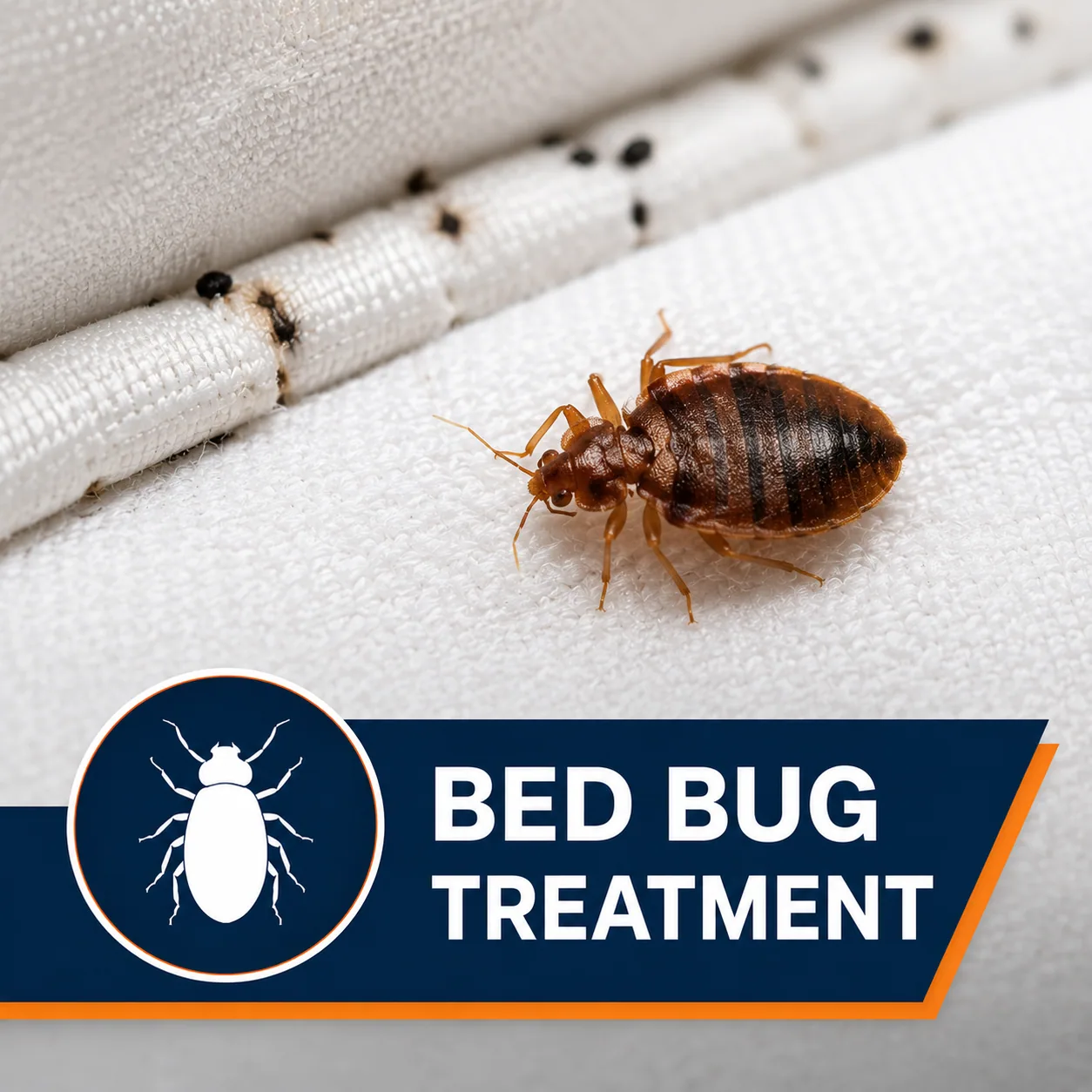
What a Bed Bug Visit Typically Looks Like in Flower Mound
Providers serving Flower Mound generally start at the active area, then work outward through harborage points before treating. For bed bug treatment, the typical workflow runs: visual and canine inspection of bedrooms, sofas, and adjacent rooms; heat treatment (whole-room thermal remediation) or targeted chemical protocol; mattress and box spring encasements installed; two-week follow-up to confirm zero activity. The exact protocol, products, and follow-up cadence are determined by the independent provider that takes your call.
Seasonal Pressure in Denton County
Summer travel volume keeps introduction rates high.
Pests Covered
- Bed bugs
Signs to Watch For
- Linear bite welts on arms and legs
- Rust-colored stains on mattress seams
- Tiny black fecal spots on box springs
- Translucent shed skins in corners
- Sweet, musty odor in heavy infestations
Same-day windows are sometimes available for Flower Mound addresses depending on the provider's route. Call the number above and the dispatcher will confirm the next window.
Bed Bug background reading
Flower Mound Service Area
Coverage spans Flower Mound — ZIP 75022, 75027, and 75028.
Bed Bug in Nearby Cities
Other Services in Flower Mound
Bed Bug FAQs — Flower Mound, TX
Will one visit clear the problem?
Sometimes — for low-pressure exterior issues like wasp nests or surface ant trails, one visit usually finishes the job. Bed Bug Treatment for established infestations runs a two-visit protocol: initial knockdown, then a follow-up two to three weeks later to confirm reproductive cycles broke.
What does the inspection cover?
The first visit walks interior rooms, attic access, crawlspace if present, exterior foundation band, fence-line harborage, and any reported activity points. The technician identifies species, locates entry points, and builds a treatment plan specific to the Flower Mound property — not a one-size-fits-all checklist.
Are products applied directly to food prep areas?
No. Treatments in kitchens go into cracks, crevices, and voids — never on counters or food-contact surfaces. Gel baits are placed inside cabinet hinges and behind appliances where pests travel but food does not.
Do Flower Mound homes need quarterly service or one-time treatment?
Both options are available. Quarterly programs make sense for Flower Mound addresses with year-round pressure — German roaches, fire ants, mosquitoes, or roof rats — because reintroduction is constant. One-time service fits acute problems like a wasp nest or single bed bug introduction.
How is Bed Bug Treatment different from a big-box DIY product?
Retail products are formulated for surface knockdown; professional protocols use non-repellent residuals, growth regulators, and targeted gels that the pest carries back to the colony or harborage. The difference is what the product does after the pest contacts it — and that gap is why retail products knock down what you see and miss what you don't.