
Mosquito Control Across DFW
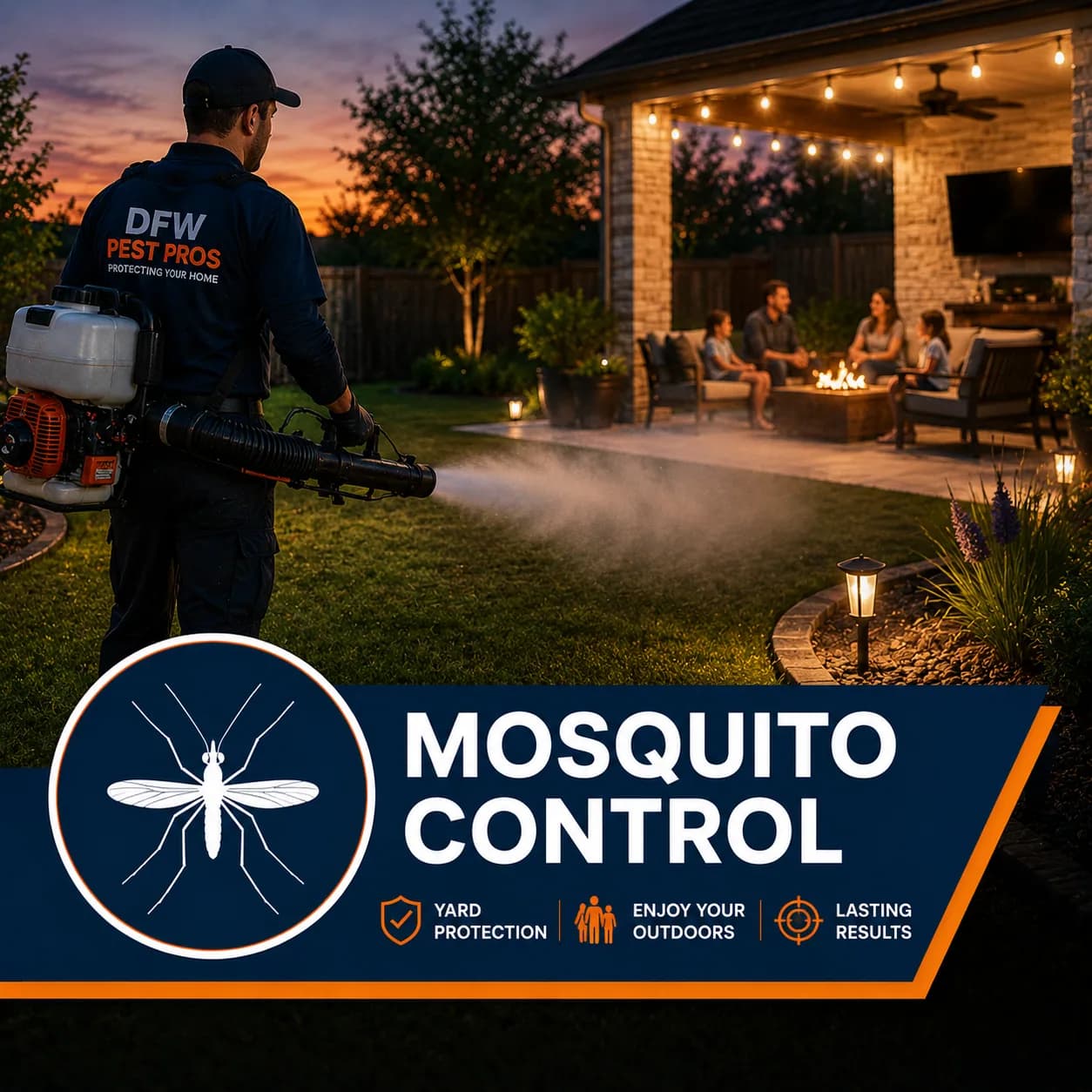
Mosquito pressure runs from late March through October in DFW. Asian tiger mosquitoes bite hardest in the daytime; Culex species drive the late-season West Nile risk. Effective programs combine larvicide, barrier spray, and habitat reduction.
- Fast dispatch
- Same-day where available
- DFW-wide coverage
What This Covers
Pests handled
- Asian tiger mosquitoes
- Culex mosquitoes
Common signs
- Daytime bites in the yard
- Larval rafts in birdbaths or gutters
- Whining swarms at dusk near patios
What a typical visit looks like
Pest control providers in the DFW area generally follow a workflow along these lines. The exact protocol, products, and follow-up cadence are determined by the independent provider that takes your call.
- Yard survey to locate standing-water harborage points
- Larvicide application to gutters, drains, and water features
- Barrier spray on foliage, fence lines, and shaded harborage
- Monthly refresh April through October
Mosquito Service by City
- Mosquito in Dallas
- Mosquito in Fort Worth
- Mosquito in Denton
- Mosquito in Arlington
- Mosquito in Plano
- Mosquito in Irving
- Mosquito in Garland
- Mosquito in Frisco
- Mosquito in Grand Prairie
- Mosquito in McKinney
- Mosquito in Mesquite
- Mosquito in Carrollton
- Mosquito in Lewisville
- Mosquito in Richardson
- Mosquito in Allen
- Mosquito in Flower Mound
- Mosquito in North Richland Hills
- Mosquito in Rowlett
Mosquito Guides
Identification, signs, and treatment context for mosquito issues in the DFW metroplex.
Frequently Asked Questions
Where does mosquito control service run?
Mosquito Control runs across all 30 DFW cities — see the coverage list below for the most-requested addresses.
How fast can the crew handle mosquito work?
Most mosquito jobs across the DFW metroplex are scheduled within 24 to 48 hours. Active infestations are often handled same-day when the local provider's route allows — final scheduling is set by the independent provider that takes the call.
What's the process for mosquito control?
Yard survey to locate standing-water harborage points. Larvicide application to gutters, drains, and water features. Barrier spray on foliage, fence lines, and shaded harborage. Monthly refresh April through October.