
Flea Treatment in Irving, TX
Flea calls in Irving climb every summer once pets spend more time outdoors. The egg-larva cycle keeps reinfesting for weeks even after adults look gone — which is why one visit usually isn't enough.
- Fast dispatch
- Same-day where available
- DFW-wide coverage
Flea Treatment in Irving, TX
Flea service is fast-dispatched across Irving, TX and the rest of Dallas County — often same-day where the local provider's schedule allows. Coverage spans all 13 Irving ZIP codes. Dallas County's mix of pre-war housing and post-war slab construction creates two distinct pest profiles.
Flea Treatment in Irving, TX works the same way it does in the rest of Dallas County: inspection first, targeted treatment second, follow-up to confirm zero activity. Irving homes carry their own pressure profile — Irving spans high-end Las Colinas slab construction and older South Irving wood-frame stock — and the protocol adjusts accordingly.
Irving coverage runs ZIP codes 75014, 75015, 75016, 75017, 75038, 75039, 75059, 75060, 75061, 75062, 75063, 75326, and 75368 across Dallas County, with a population near 255,000 and a low-density build pattern. The local profile leans toward fire ant, german cockroach, bed bug, subterranean termite. Dallas County's mix of pre-war housing and post-war slab construction creates two distinct pest profiles. Older neighborhoods drive carpenter ant and roof rat volume; newer subdivisions see most of the termite swarmer calls. German roach pressure runs heavy in older multifamily stock, and fire ants own the yards.
Coverage spans Irving neighborhoods including Las Colinas, Valley Ranch, Hackberry Creek, Song.
What a Flea Visit Typically Looks Like in Irving
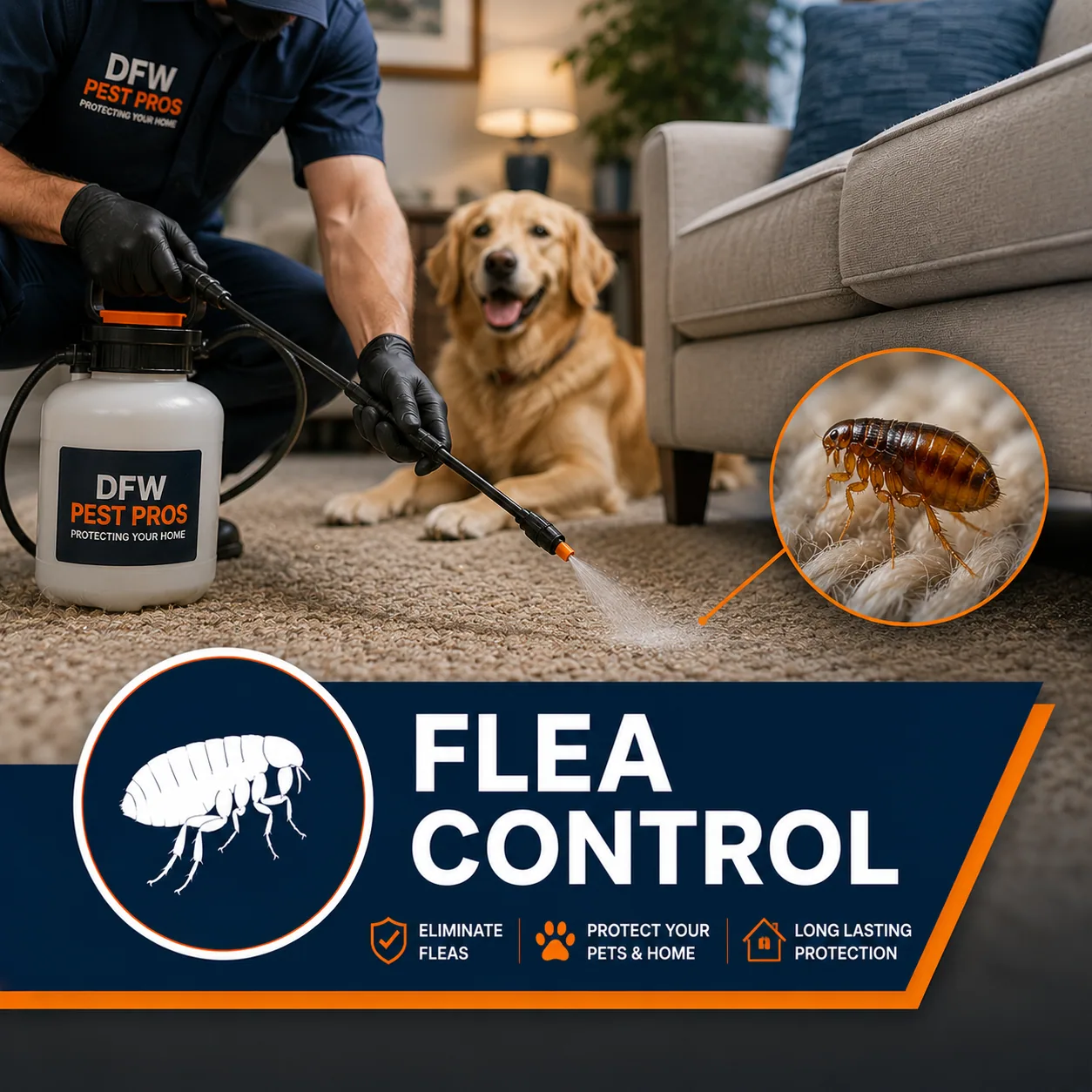
Providers serving Irving generally start at the active area, then work outward through harborage points before treating. For flea treatment, the typical workflow runs: interior treatment with insect growth regulator to halt the egg-larva cycle; adulticide application to carpets, baseboards, and pet-resting areas; exterior yard barrier where pets spend time; two-week follow-up visit to catch the next emergence wave. The exact protocol, products, and follow-up cadence are determined by the independent provider that takes your call.
Seasonal Pressure in Dallas County
Peak flea pressure on pets and indoor populations.
Pests Covered
- Cat fleas
- Dog fleas
Signs to Watch For
- Pet scratching, biting, or grooming excessively
- Tiny black flecks (flea dirt) on pet bedding
- Bites in clusters on ankles and lower legs
- Adult fleas jumping when carpet is disturbed
Ready for service at a Irving address? Call the number above to reach dispatch and confirm the next available window.
Flea background reading
Irving Service Area
Coverage spans Irving — ZIP 75014, 75015, 75016, 75017, 75038, 75039, 75059, 75060, 75061, 75062, 75063, 75326, and 75368.
Flea in Nearby Cities
Other Services in Irving
Flea FAQs — Irving, TX
Do you treat ZIP codes beyond Irving?
Yes. The crew covers Irving and surrounding Dallas County ZIP codes, plus neighboring cities — the page footer lists nearby coverage. If the address falls outside the standard radius the agent confirms scheduling at booking.
Is there anything I need to do before the technician arrives?
For most Flea Treatment visits, no prep is required. For bed bug heat treatments, prep instructions go out 48 hours ahead. For roach jobs, the technician asks for access to under-sink cabinets and behind appliances; clearing those areas in advance speeds up the visit.
Will one visit clear the problem?
Sometimes — for low-pressure exterior issues like wasp nests or surface ant trails, one visit usually finishes the job. Flea Treatment for established infestations runs a two-visit protocol: initial knockdown, then a follow-up two to three weeks later to confirm reproductive cycles broke.
What time of year is worst for pests in Irving?
Spring is the heaviest swarm and emergence window in Irving — flea egg counts surge with warming soil temperatures. Summer pressure stays high across Dallas County — peak flea pressure on pets and indoor populations. Fall introductions accelerate as temperatures drop — indoor infestations persist as outdoor populations move inside with pets. Winter activity continues indoors — eggs and pupae survive indoors through the winter; reinfestation possible without treatment.
How is Flea Treatment different from a big-box DIY product?
Retail products are formulated for surface knockdown; professional protocols use non-repellent residuals, growth regulators, and targeted gels that the pest carries back to the colony or harborage. The difference is what the product does after the pest contacts it — and that gap is why retail products knock down what you see and miss what you don't.