
Rodent Control in Grapevine, TX
Roof rats are the dominant attic rodent across Grapevine and the rest of Tarrant County. Pecan and oak canopies along older streets give them highway access to rooflines.
- Fast dispatch
- Same-day where available
- DFW-wide coverage
Rodent Control in Grapevine, TX
Rodent Control dispatches fast to Grapevine, TX addresses in Tarrant County. The local pest profile centers on fire ant, asian tiger mosquito, carpenter ant.
House mice reproduce in utility rooms and pantries year-round. That makes Rodent Control in Grapevine a call worth booking before the season shifts. Crews cover Grapevine and the rest of Tarrant County, and most addresses can be on the schedule the same week.
Grapevine coverage runs ZIP codes 75261, 76051, and 76099 across Tarrant County, with a population near 51,000 and a low-density build pattern. The local profile leans toward fire ant, asian tiger mosquito, carpenter ant, roof rat. Tarrant County combines pre-war Fort Worth wood-frame housing with the 1960s–1980s mid-cities slab subdivisions. Carpenter ant pressure is highest in Fort Worth proper; termite swarmer activity runs heaviest across the mid-cities slab housing every spring; fire ants own the residential yards.
Coverage spans Grapevine neighborhoods including Historic Downtown, Silver Lake, Lakeview, Glade Crossing.
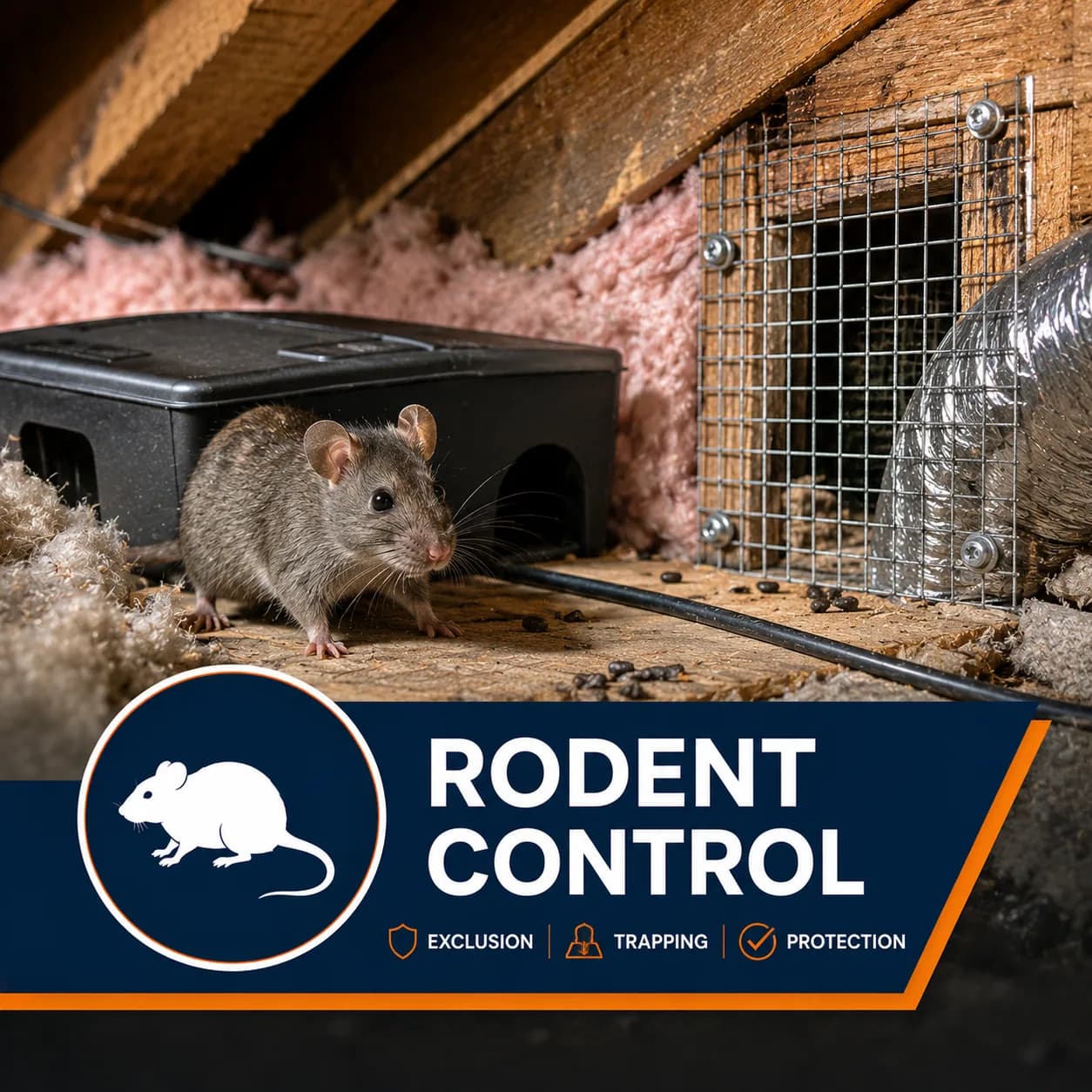
What a Rodent Visit Typically Looks Like in Grapevine
Pest control visits in Grapevine typically start with a property walk — interior rooms, attic access, exterior foundation band — then move into species-specific treatment. For rodent control, the typical workflow runs: attic, crawlspace, and exterior inspection to find entry points; hardware-cloth and copper-mesh exclusion of every gap larger than 0.25 inch; snap-trap and tamper-resistant station deployment per ipm protocol; two-week follow-up to confirm zero activity, then ongoing exterior stations. The exact protocol, products, and follow-up cadence are determined by the independent provider that takes your call.
Seasonal Pressure in Tarrant County
House mice reproduce in utility rooms and pantries year-round.
Pests Covered
- House mice
- Roof rats
- Norway rats
Signs to Watch For
- Droppings along baseboards or in pantry
- Scratching or rolling sounds in the attic after sundown
- Gnaw marks on wood, drywall, or food packaging
- Greasy rub marks along utility lines
Same-day windows are sometimes available for Grapevine addresses depending on the provider's route. Call the number above and the dispatcher will confirm the next window.
Rodent background reading
Grapevine Service Area
Coverage spans Grapevine — ZIP 75261, 76051, and 76099.
Rodent in Nearby Cities
Other Services in Grapevine
Rodent FAQs — Grapevine, TX
Will one visit clear the problem?
Sometimes — for low-pressure exterior issues like wasp nests or surface ant trails, one visit usually finishes the job. Rodent Control for established infestations runs a two-visit protocol: initial knockdown, then a follow-up two to three weeks later to confirm reproductive cycles broke.
What time of year is worst for pests in Grapevine?
Spring is the heaviest swarm and emergence window in Grapevine — roof rat populations peak in attics following winter sheltering. Summer pressure stays high across Tarrant County — house mice reproduce in utility rooms and pantries year-round. Fall introductions accelerate as temperatures drop — cooling temperatures drive new attic intrusions through gable vents. Winter activity continues indoors — rodents pack into attics, crawlspaces, and garage corners.
Do you offer recurring plans?
Yes. Quarterly is the most common cadence for Grapevine homes. Monthly is available for high-pressure addresses or commercial properties. The agent confirms the right cadence based on the species, the structure, and the surrounding harborage.
Do you treat ZIP codes beyond Grapevine?
Yes. The crew covers Grapevine and surrounding Tarrant County ZIP codes, plus neighboring cities — the page footer lists nearby coverage. If the address falls outside the standard radius the agent confirms scheduling at booking.
What does the inspection cover?
The first visit walks interior rooms, attic access, crawlspace if present, exterior foundation band, fence-line harborage, and any reported activity points. The technician identifies species, locates entry points, and builds a treatment plan specific to the Grapevine property — not a one-size-fits-all checklist.