
Wasp & Hornet Removal in North Richland Hills, TX
Wasp removal calls peak across North Richland Hills every May and June. Red wasp nests under North Richland Hills eaves are the most common — and the most aggressive when disturbed.
- Fast dispatch
- Same-day where available
- DFW-wide coverage
Wasp & Hornet Removal in North Richland Hills, TX
Wasp service is fast-dispatched across North Richland Hills, TX and the rest of Tarrant County — often same-day where the local provider's schedule allows. Coverage spans all 3 North Richland Hills ZIP codes. Tarrant County combines pre-war Fort Worth wood-frame housing with the 1960s–1980s mid-cities slab subdivisions.
Active pest problem at a North Richland Hills address? Dispatch answers calls fast and connects you with a local independent pest control provider serving Tarrant County — same-day appointments are sometimes available depending on the provider's schedule. This page covers what Wasp & Hornet Removal typically looks like for a North Richland Hills home — what gets treated, how the visit usually runs, and what to expect after the technician leaves.
North Richland Hills coverage runs ZIP codes 76180, 76182, and 76185 across Tarrant County, with a population near 70,000 and a low-density build pattern. The local profile leans toward fire ant, subterranean termite, asian tiger mosquito, roof rat. Tarrant County combines pre-war Fort Worth wood-frame housing with the 1960s–1980s mid-cities slab subdivisions. Carpenter ant pressure is highest in Fort Worth proper; termite swarmer activity runs heaviest across the mid-cities slab housing every spring; fire ants own the residential yards.
Coverage spans North Richland Hills neighborhoods including Forest Glenn, Iron Horse Commons, Home Town, Davis Boulevard corridor.
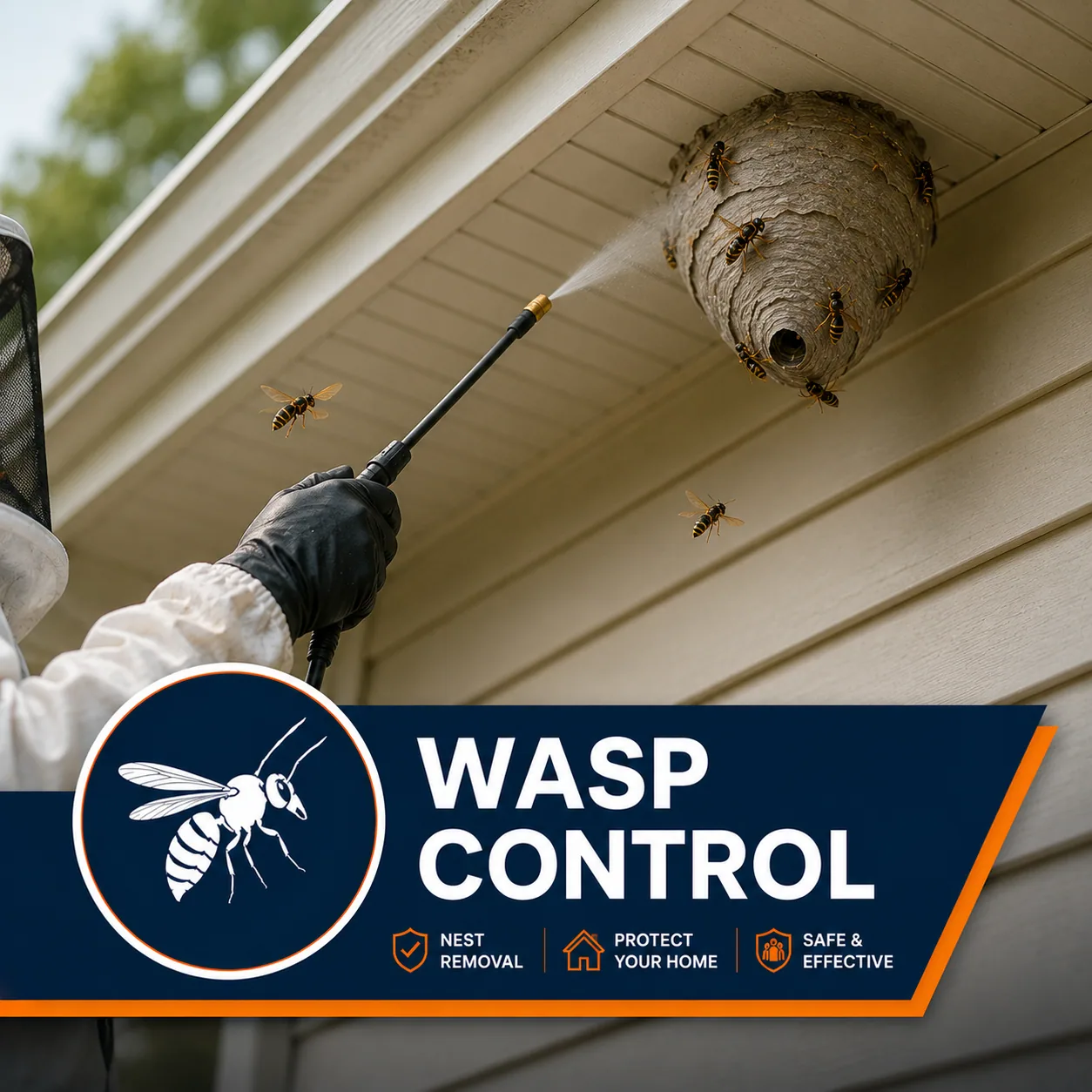
What a Wasp Visit Typically Looks Like in North Richland Hills
Providers serving North Richland Hills generally start at the active area, then work outward through harborage points before treating. For wasp & hornet removal, the typical workflow runs: locate the nest and identify the species; apply contact knockdown product to the nest entry; remove the physical nest after activity ceases; treat eaves and soffit lines to suppress rebuild. The exact protocol, products, and follow-up cadence are determined by the independent provider that takes your call.
Seasonal Pressure in Tarrant County
Yellowjacket ground nests grow large enough to be a hazard.
Pests Covered
- Paper wasps
- Red wasps
- Yellowjackets
- Bald-faced hornets
- Mud daubers
- Cicada killers
Signs to Watch For
- Visible nest under eaves or in shrubs
- Heavy wasp traffic at one entry point
- Yellowjacket ground holes in turf
To book wasp service for a North Richland Hills property, call the dispatch number listed above.
Wasp background reading
North Richland Hills Service Area
Coverage spans North Richland Hills — ZIP 76180, 76182, and 76185.
Wasp in Nearby Cities
Other Services in North Richland Hills
Wasp FAQs — North Richland Hills, TX
What time of year is worst for pests in North Richland Hills?
Spring is the heaviest swarm and emergence window in North Richland Hills — paper and red wasp nests start building under eaves in april. Summer pressure stays high across Tarrant County — yellowjacket ground nests grow large enough to be a hazard. Fall introductions accelerate as temperatures drop — bald-faced hornet aerial nests reach full size in september. Winter activity continues indoors — old nests are removed during low-activity months.
Do you offer recurring plans?
Yes. Quarterly is the most common cadence for North Richland Hills homes. Monthly is available for high-pressure addresses or commercial properties. The agent confirms the right cadence based on the species, the structure, and the surrounding harborage.
Will one visit clear the problem?
Sometimes — for low-pressure exterior issues like wasp nests or surface ant trails, one visit usually finishes the job. Wasp & Hornet Removal for established infestations runs a two-visit protocol: initial knockdown, then a follow-up two to three weeks later to confirm reproductive cycles broke.
Are the products safe around children and pets?
Yes. Wasp & Hornet Removal in North Richland Hills uses EPA-registered products applied per label rate. After treatment, indoor surfaces are dry within about an hour. Pets and children can re-enter treated rooms once visible product has dried — typically before the technician finishes the exterior.
What does the inspection cover?
The first visit walks interior rooms, attic access, crawlspace if present, exterior foundation band, fence-line harborage, and any reported activity points. The technician identifies species, locates entry points, and builds a treatment plan specific to the North Richland Hills property — not a one-size-fits-all checklist.